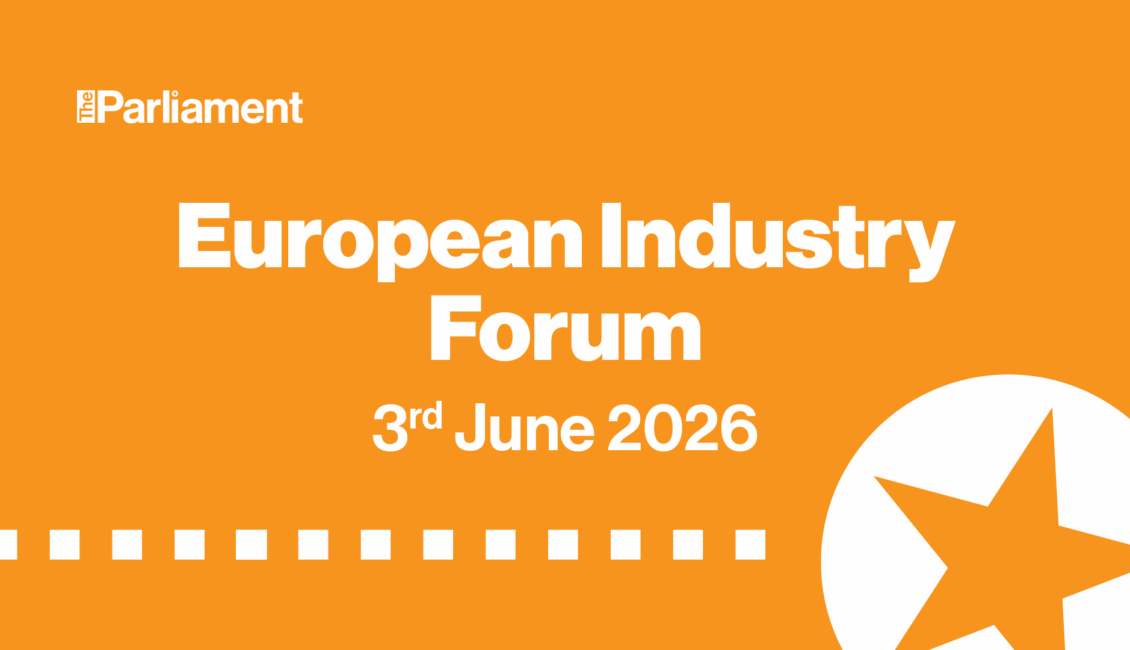
European Industry Forum 2026

Europe is at a pivotal moment for its industrial base. Decarbonisation and de-risking, alongside global competition and strategic dependencies, are reshaping how Europe powers its economy and maintains industrial strength. Energy costs, access to clean technologies, resilient supply chains, and skilled labour have become central to Europe’s competitiveness, resilience, and strategic autonomy. 

As the EU advances flagship initiatives and strategic frameworks – including the Clean Industrial Deal, the Competitiveness Compass, and the Critical Raw Materials Act – decisions taken today will shape Europe’s industrial strength, energy sovereignty, and social cohesion for decades to come. 

This high-level forum will convene EU policymakers, industry leaders, and experts to explore how aligned energy and industrial strategies can strengthen competitiveness and mobilise investment for a decarbonised and independent future.

#PMindustry

Interested in this event?

Event Details

- How can the EU build a modern industrial base that supports growth, resilience, and quality jobs while maintaining its global leadership in standards and sustainability?

- What will it take to turn the Clean Industrial Deal and European Competitiveness Fund into engines of renewal across all sectors?

- Industrial resilience starts upstream—with reliable access to critical materials, components, and technologies. How can Europe ensure reliable access to critical raw materials and advanced technologies for key industrial sectors?

- How can the new Critical Raw Materials Centre and Advanced Materials Act help Europe build autonomy in clean tech, energy, and defence supply chains while keeping markets efficient and open?

- Can joint purchasing, stockpiling, and smarter recycling strategies reduce dependencies without adding cost or complexity for manufacturers?

- With global trade tensions and shifting alliances, how can Europe and its partners realign trade and investment to turn uncertainty into strategic opportunity?

- How can the EU’s evolving trade strategy—anchored in the new EU–US Trade Framework and free trade agreements with Mercosur, India, and ASEAN—support industrial growth while protecting strategic interests?

- Can “open but not naïve” trade deliver a resilient and fair industrial order?

- How quickly can European industry shift from peacetime to wartime production, and what legal, financial, and regulatory obstacles would slow that transition today?

- Are current EU instruments (SAFE, EDIRPA, ASAP, the Defence Industry Programme) designed for incremental resilience—or for rapid mobilisation under war-level demand?

- What level of demand aggregation and long-term procurement guarantees are needed to justify permanent scale-up of defence production across Member States?

- Europe’s automotive industry remains the beating heart of its manufacturing ecosystem. In a decade of electrification and digitalisation, how can Europe’s policy mix—from support for small affordable cars to the Battery Manufacturing Scheme and Social Leasing initiatives—keep the automotive sector globally competitive, innovative, and sustainable?

- How should Europe reassess the 2035 ban on internal combustion engines to balance industrial competitiveness, consumer affordability, and climate credibility?

- What tools should Europe deploy to counter China’s state-backed automotive and battery advantage while remaining compliant with WTO rules and open-market principles?

- What are the key opportunities and challenges for scaling next-generation energy technologies such as fusion, green hydrogen, and advanced energy materials in Europe?

- How can early investments, lead markets, and coordinated regulation under the Fusion Power Strategy and Lead Markets Initiative turn Europe into the global hub for clean tech manufacturing?

- How can Europe’s energy policies and investment strategies ensure these technologies deliver a reliable, low-carbon power supply while strengthening industrial competitiveness?

- As Europe phases out imports of Russian gas, how can the EU build a resilient energy system based on diversification and domestic production?

- How can power grid modernisation and cross-border energy coordination support resilience and flexibility in an increasingly electrified energy system?

- How can capital markets and EU instruments—from the Savings and Investment Union to the European Competitiveness Fund—be mobilised to crowd in private investment and finance the infrastructure of energy independence?

Event Details